
The production of beer, wine, and spirits are considered to be a part of craft industries, but there is a staggering amount of technical work that goes into the manufacturing of alcohol. As with other industries, steam plays a silent but vital role in the day-to-day processes. From heating mash and boiling wort to sanitizing systems and initiating distillation, steam is the utility that’s behind every consistent batch, clean process, and reliable run of production.
This makes choosing the right industrial steam boiler a priority. In a brewery or distillery, steam is not simply a support function, it is part of the process itself, affecting product quality, operating efficiency, safety, and more. For facilities that depend on precision and consistency, the steam system must be as dependable as the ingredients that go into the final product.
At Clayton Industries, we understand how much the right steam solution can influence an operation. As an industrial steam boiler manufacturer, Clayton has built its reputation around high-efficiency steam systems designed for demanding applications where performance, reliability, and quality matter. That makes our systems a natural fit for brewing and distilling, where space is often limited, and production demands can change quickly.
Steam’s Role in Brewing
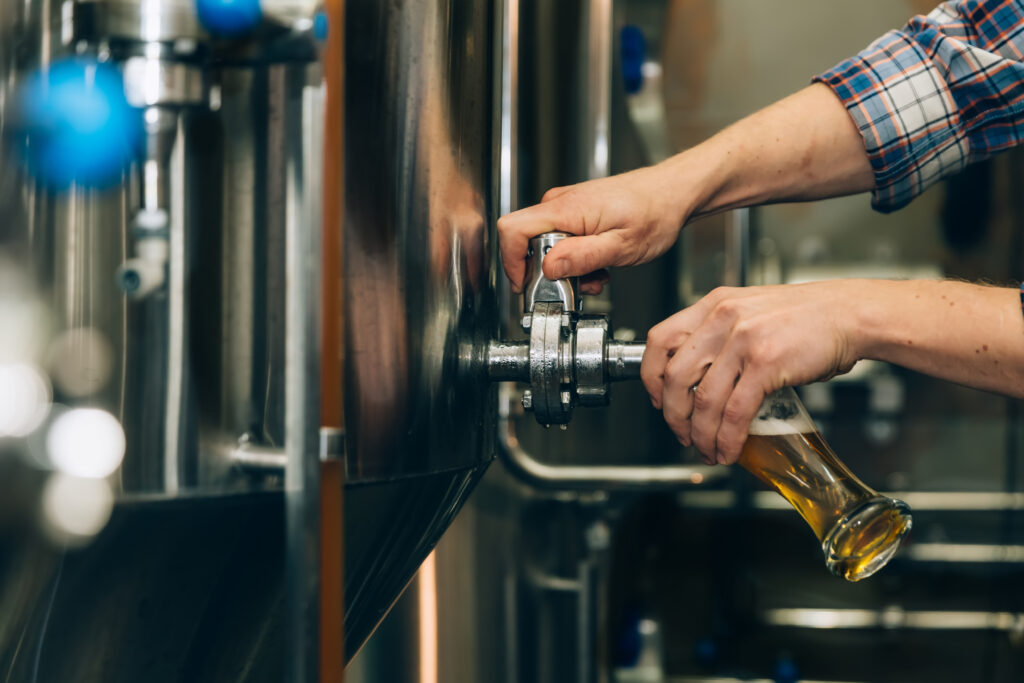
Beer production begins long before the fermentation process that creates alcohol.
One of the first major applications for steam is mashing. During mashing, milled grains are mixed with hot water to activate enzymes that convert the starches in the grain into fermentable sugars. This process requires precise, steady heating to maintain temperatures, and steam is an ideal medium for this application.
Steam is also commonly used during wort boiling. After mashing, the resulting liquid, known as wort, is separated from the spent grain and transferred to a brew kettle. The wort is heated to a boil, where additional ingredients are added to provide aroma and flavor. Similar to the mashing process, steam can provide an efficient and controllable source of heat for the brewing kettle, typically through jacketed heat transfer.
Beyond the brewing process itself, steam can also provide hot water and heat throughout a brewery. Hot water is an essential utility, as it’s required for a variety of brewing and cleaning operations, while steam can support other temperature-control requirements throughout the facility, which can vary by location.
Finally, steam can play an important role in cleaning and sanitation. While this aspect of production is often glossed over during a tour, breweries must maintain strict sanitary conditions to prevent unwanted microorganisms from affecting the beer. Steam can be used to sanitize process equipment, piping, tanks, and other components where high-temperature cleaning or sterilization is required. A common practice in the industry is to pump steam directly through process lines between batches, helping to remove residue that may have been left behind, ensuring both the cleanliness and flavor of the next batch.
Once the wort has been prepared and cooled, yeast is introduced and fermentation begins. The yeast converts the fermentable sugars into alcohol and carbon dioxide, transforming the wort into beer.
A common theme in brewing is the application of precise, even heat, and a good industrial steam boiler helps breweries maintain temperature control during these processes, as even small shifts in heat can affect the character of the final product. Brewers want repeatability. They want batch after batch to come out with the same quality, flavor profile, and character, and a reliable steam boiler makes that possible.
Clayton’s steam solutions are designed with that kind of consistency in mind. Our systems deliver high-quality, precise steam, so breweries can be confident in the quality of their batch every time.
Steam’s Role in Distilling
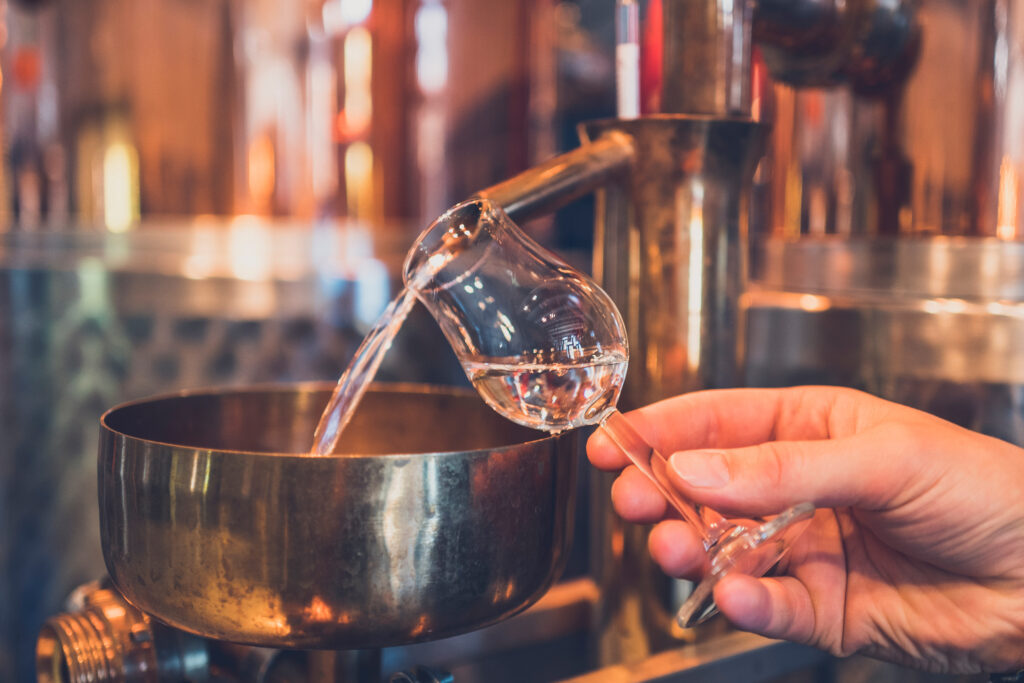
Distillation takes the process one step further. While brewing relies on fermentation to produce alcohol, heat plays a direct role in the separation and concentration of alcohol. After fermentation, the resulting liquid contains alcohol along with water and other compounds. Distillation, on the other hand, uses heat to separate and concentrate the alcohol, and steam is one of the most widely used sources of process heat in distilleries.
The process begins with the preparation of the raw materials. Depending on the spirit being produced, this may include grains, molasses, fruits, or other ingredients. Grain-based spirits such as whisky and bourbon typically require a mashing or cooking stage in which the raw material is mixed with water and heated to create fermentable sugars, with steam being an excellent choice to provide this heat.
Once fermentation is complete, the fermented liquid is ready for distillation. Steam can heat the distillation still indirectly through jackets, coils, or external heat exchangers. Steam transfers heat to the liquid without coming into direct contact with the product, generating the vapor needed for separation.
Some distillation systems also make use of direct steam injection. In this application, steam is introduced directly into the fermented liquid. As the steam passes through the liquid, it transfers heat and helps drive volatile alcohol compounds into the vapor stream. That alcohol-rich vapor can then be condensed and collected.
Distillation may occur in multiple stages. An initial stripping stage recovers alcohol from the fermented wash, while subsequent distillation or rectification can further concentrate the alcohol and separate unwanted compounds. Steam provides the heat required to maintain these processes and can therefore be a significant part of the energy system in a distillery.
Steam also supports operations beyond the still itself. Much like breweries, distilleries require hot water for a variety of processes, while steam can be used for cleaning and sanitizing tanks, piping, heat exchangers, and other equipment. In facilities using steam-in-place systems, steam can provide thermal sanitation of product-contact lines and equipment between production cycles.
The exact role of steam varies depending on the type of spirit and the distillery’s process design, but because distilling is so sensitive to temperature and consistency, the steam system has to be stable. A fluctuating supply can create problems in product quality and operating efficiency, which is why many facilities look for high-pressure steam boiler manufacturers that understand the process requirements of distilleries and can deliver systems built for precision.
As an industrial boiler company with long experience in process steam, Clayton knows that a distillery needs more than a boiler with the right rating on paper. It needs a complete steam solution that responds quickly, operates efficiently, and supports the production process from start to finish.
Why Steam Quality Matters
As previously mentioned, steam quality is one of the most important factors in brewing and distilling. If steam contains too much moisture, it can reduce heat transfer efficiency and create an inconsistent final product. Dry, high-quality steam provides better thermal performance, more predictable heat transfer, and improved reliability for sanitary and process applications, all of which brewers and distillers value highly.
For facilities evaluating industrial boiler companies, steam quality should be near the top of the list of selection criteria. A system might have the right capacity, but if it cannot provide consistent steam quality, the final product will suffer.
Compact Equipment for Busy Facilities
Brewing and distilling operations often have to work within tight floor plans, given the sheer size of the equipment needed to produce alcohol, and a steam boiler needs to fit seamlessly into that floor plan.
This is another area where Clayton stands out as an industrial steam boiler manufacturer. Our systems are designed to be compact without compromising performance, and when space is at a premium, every square foot has value.
A compact industrial steam boiler can simplify installation and help facilities make better use of available space. For breweries and distilleries considering expanding production or replacing outdated equipment, that flexibility can be crucial.
When comparing high pressure steam boiler manufacturers, breweries and distilleries should consider how much space the system requires, along with its efficiency, installation requirements, and ability to support future growth.
Working with the Right Partner
When a brewery or distillery is investing in steam equipment, the relationship with the supplier matters as much as the hardware itself. Facilities should look for industrial boiler companies that understand process requirements, installation requirements, and long-term support needs.
The best industrial steam boiler manufacturer will not only provide equipment but also help guide the customer through system design, installation planning, and future service considerations. That broader support can make a major difference in long-term operating value.
Clayton’s approach is built around that idea. We aim to provide complete steam solutions that fit the customer’s production goals and facility constraints. For brewing and distilling, that means equipment that supports quality, efficiency, and dependable operation.
Why Brewing and Distilling Facilities Choose Clayton Industries
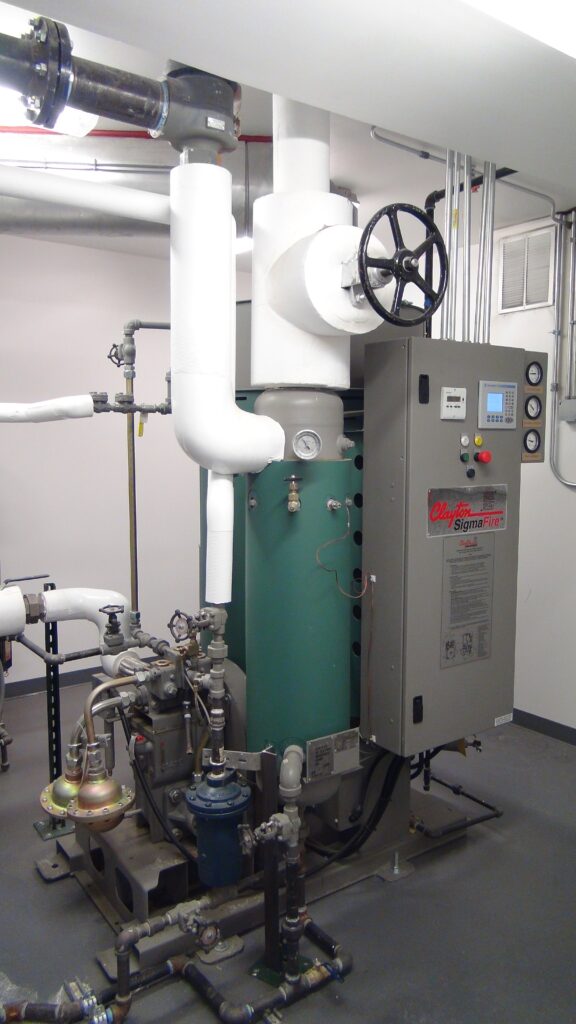
Clayton Industries is more than just an industrial boiler company. We focus on helping customers get better results from their steam. In brewing and distilling, that means equipment built around the needs of the process: compact, responsive, efficient, and dependable.
For a facility manager or plant engineer, that can translate into:
- Better process stability
- Easier installation planning
- More efficient use of energy
- Lower operational friction
- Greater flexibility to support growth.
This is what customers expect from serious industrial boiler companies, and it’s what Clayton strives provide.
Building a Better Steam System for Brewing and Distilling
Brewing and distilling are industries built on precision. The ingredients matter, the recipe matters, and the timing matters, and a well-designed steam solution makes the whole process more consistent and reliable.
Clayton Industries continues to support brewing and distilling customers with solutions designed for real-world performance. For plants looking for dependable steam, practical design, and a partner that understands the demands of food and beverage production, Clayton is built for the job.