
Paper & Corrugated Industry
Home > Industries > Paper & Corrugated
Clayton Industries Supports the Paper & Corrugated Industry
Corrugation and paper are both massive industries, and one that the general public may at times take for granted. Specifically, corrugated paperboard, commonly referred to as cardboard, is vital in packaging and construction.
A typical corrugation plant manufactures cardboard by means of a fluted sheet, sandwiched between two liners, bonded together with adhesive, which creates a durable, yet lightweight product. Throughout this process, precision temperature control is absolutely vital, in order to ensure product quality and efficient manufacturing process.
Steam is the ideal choice for this application, as it provides a reliable, even supply of heat throughout the manufacturing process, and is used at nearly every stage. Paper must be heated and introduced to an ideal level of moisture, before being carried throughout the plant on steam heated rollers to ensure a proper temperature. Adhesive must be warmed to allow for an ideal bond. The two layers of liners, with a fluted sheet lined with adhesive between them, are pressed together by means of a steam heated press to create a proper adhesion. Following this, a finished product with pass through a heated steam application to quickly cure the finished product. And we haven’t even mentioned the near constant use of steam showers on machinery between product passes, keeping equipment clean.
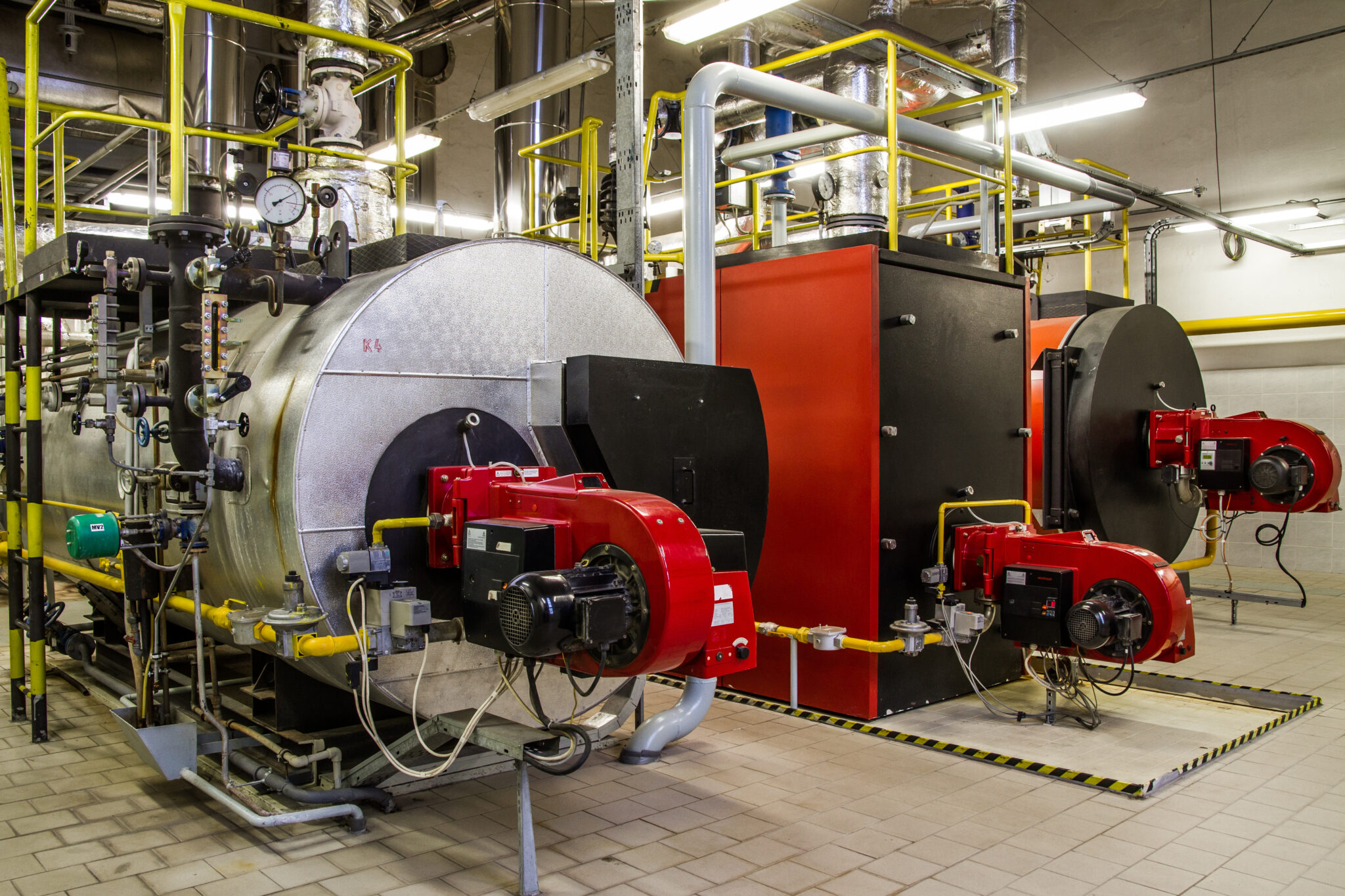
With its precision temperature control, high quality dry steam, and ability to respond rapidly to changing load demands, the Clayton steam generator is the perfect complement to the corrugation industry.

Key Benefits
Precision Control
Regardless of where the steam is being used in your facility, Clayton’s control scheme offers you ideal levels of moisture and pressure at the push of a button.
Quality Steam
Clayton’s mechanical steam separator delivers steam in excess of 99% dryness, ensuring quality results at every stage of the corrugation process.
Industry Leading Efficiency
Clayton’s monotube coil and counter flow exchanger design provides unmatched efficiency, bring both greater optimization and fuel savings to your facility.
Featured Case Study
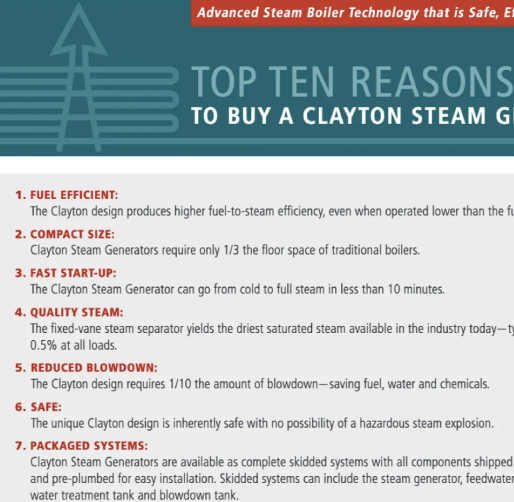
Top 10 Reasons To Buy a Clayton Steam Generator
1. FUEL EFFICIENT:
The Clayton design produces higher fuel-to-steam efficiency, even when operated lower than the full firing rate.
2. COMPACT SIZE:
Clayton Steam Generators require only 1/3 the floor space of traditional boilers.
3. FAST START-UP:
The Clayton Steam Generator can go from cold to full steam in less than 10 minutes.
4. QUALITY STEAM:
The fixed-vane steam separator yields the driest saturated steam available in the industry today — typically less then
0.5% at all loads.
Frequently Asked Question's
Steam boilers provide the heat needed to condition paper, form flutes, and bond liners to the corrugated medium. Steam-heated rollers and presses help maintain production temperatures, while controlled heating supports adhesive bonding and consistent finished board quality.
Dry saturated steam is generally suitable for corrugator heating because its temperature can be controlled through pressure. Excess moisture and trapped air interfere with heat transfer. Supplying steam at the correct pressure and dryness helps maintain consistent temperatures across rolls and hot plates.
The required steam pressure depends on the corrugator’s design, operating speed, and heating section. Rolls and hot plates may require different pressures. Follow the equipment manufacturer’s specifications and account for distribution losses when selecting boiler pressure; one setting is not suitable for every installation.
Steam quality affects how consistently the paper and adhesive receive heat. Stable heating helps maintain the conditions needed for forming and bonding. Clayton’s mechanical steam separator delivers steam with more than 99% dryness, supporting controlled heat delivery throughout the corrugation process.
Condensate must drain from heated rolls and hot plates to maintain effective heat transfer. Poor drainage can reduce surface temperatures and disrupt heating. Properly selected traps, siphons, and return systems help remove condensate under the machine’s actual operating conditions.
Calculate the steam required by all equipment operating simultaneously, including normal production and startup loads. Check minimum demand, peak duration, required pressure, and future expansion. Boiler selection should reflect the plant’s operating schedule and demand range, rather than relying only on a single maximum-capacity figure.
Yes, a properly selected steam generator can adjust output as production demand changes. Clayton identifies rapid load response as a feature of its generators for corrugation applications. The system still needs sufficient capacity and suitable controls to maintain the required steam supply during production changes.
Steam showers heat and moisten the corrugating medium before flute formation. They can also condition and clean the double-backer felt. Steam separation and controlled shutoff help prevent unwanted water droplets and localized wetting when the machine stops.
Returning suitable hot condensate reduces the energy needed to heat replacement water and can lower water-treatment demand. Economizers and blowdown heat recovery may provide further savings. Matching boiler output to actual production demand also helps avoid inefficient operation during periods of low steam use.
Clayton states that its steam generators can go from cold to full steam in less than 10 minutes. This can support production schedules requiring frequent starts. However, the corrugator, distribution piping, and heated surfaces also need time to reach their required operating conditions.
Contact a Clayton Representative